Findings and Diagnostic Goals of Carotid Doppler
The focus is on the detection of vascular wall thickening, cholesterol plaques (deposits) and dissections (tears in the vessel wall). Furthermore, Doppler measurement allows for the visualisation and acoustic representation of blood flow, including the assessment of flow direction, speed and potential accelerations and turbulence.
Additionally, a carotid Doppler can be used to assess whether both carotid arteries are equally perfused or if there are differences between the right and left sides. The surface of the vessel wall also becomes visible: it can appear smooth or irregular, which may indicate structural changes. If findings are already known, a carotid Doppler also allows for an assessment of whether the condition of the vessels has changed over time. This provides a differentiated picture of the structure and function of the carotid arteries and their blood flow.
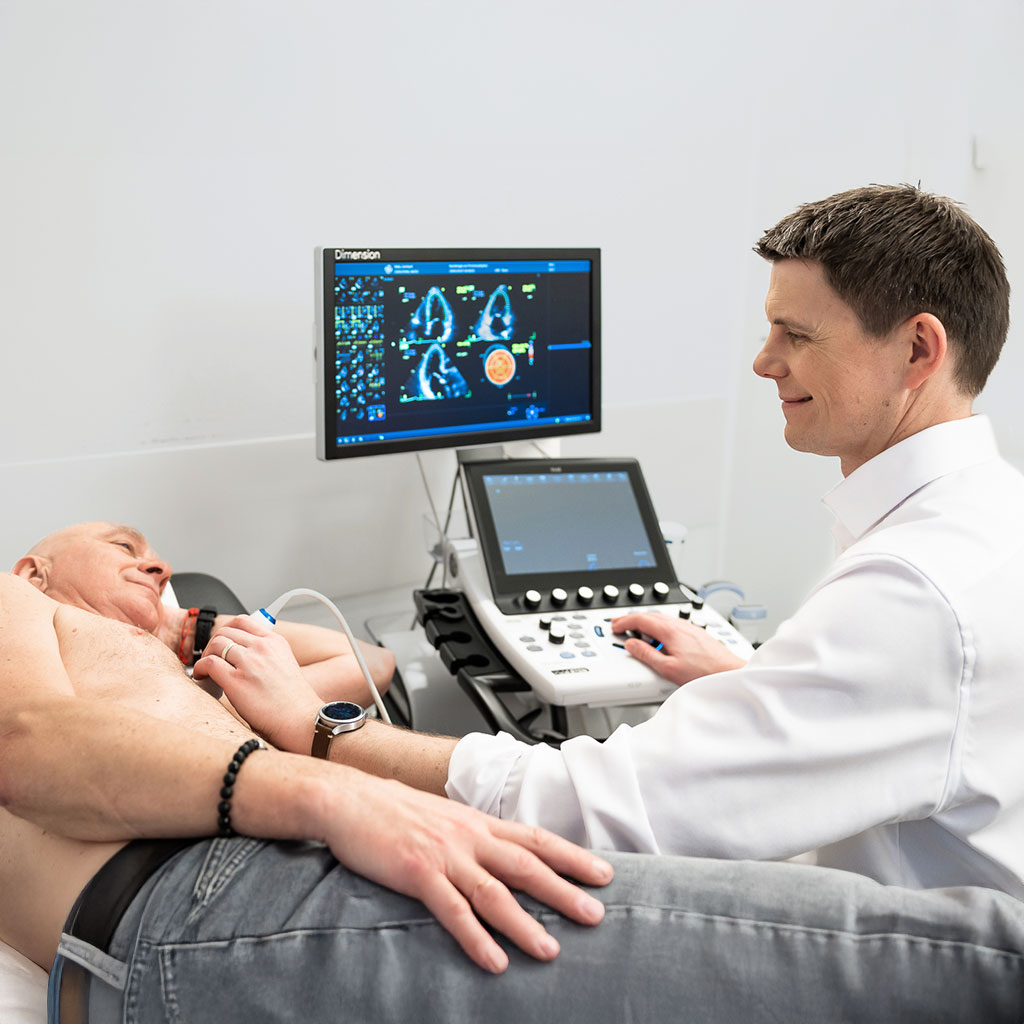
The carotid Doppler is a proven, gentle ultrasound examination of the neck vessels and is part of routine vascular diagnostics. A small, non-invasive ultrasound device, which displays live images on a monitor, is used for the examination.