
Right heart catheterisation: Procedure, duration, and significance

In modern cardiology, a heart catheter is considered an invasive diagnostic procedure. During the Left ventricular catheter primarily used for assessing the coronary arteries, the right heart catheter is used for precise measurement of pressure and oxygen levels in the right heart and pulmonary circulation.

A right heart catheter provides essential haemodynamic data that cannot be obtained with comparable accuracy by any other examination method. Right heart catheterisation is used particularly when there is suspicion of a disease of the pulmonary circulation or structural changes in the right heart.
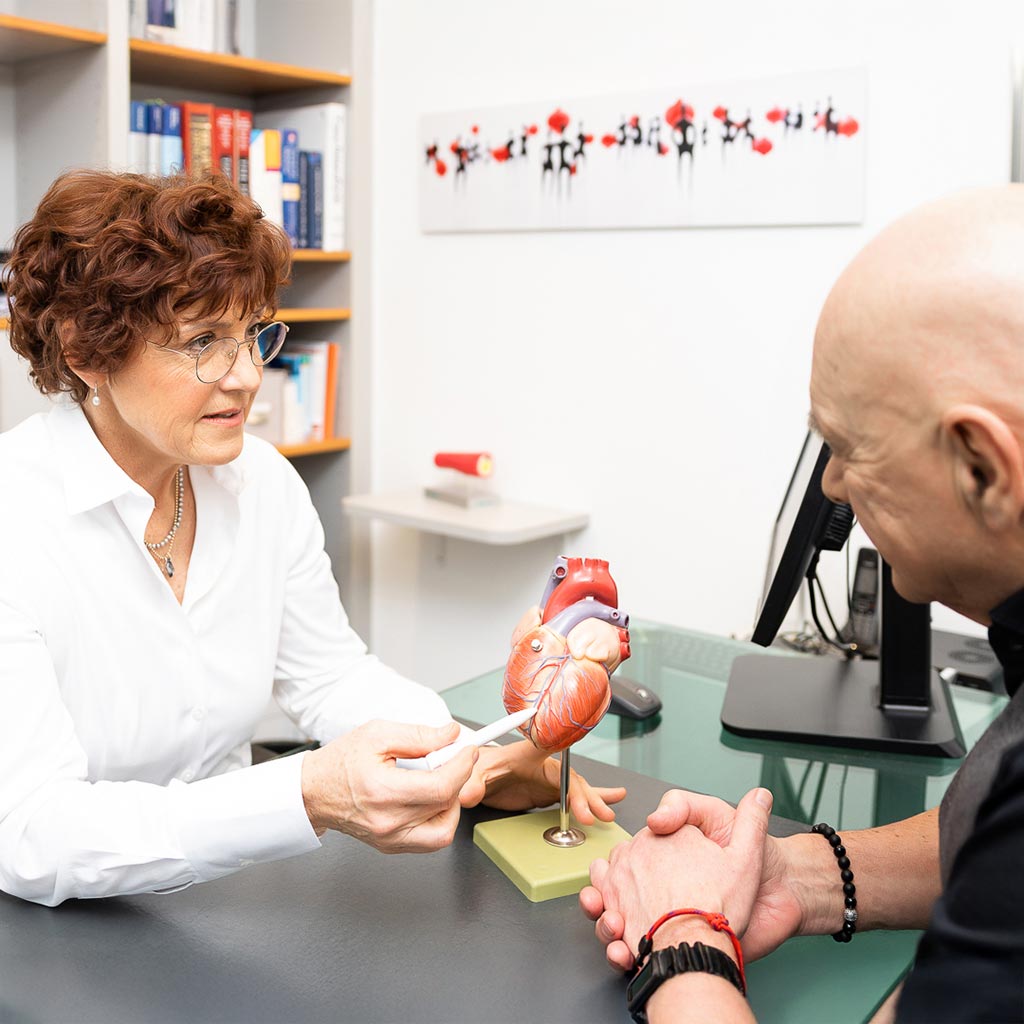
Dr Irmingard Reindl in conversation with a patient

Right heart catheterisation at a glance

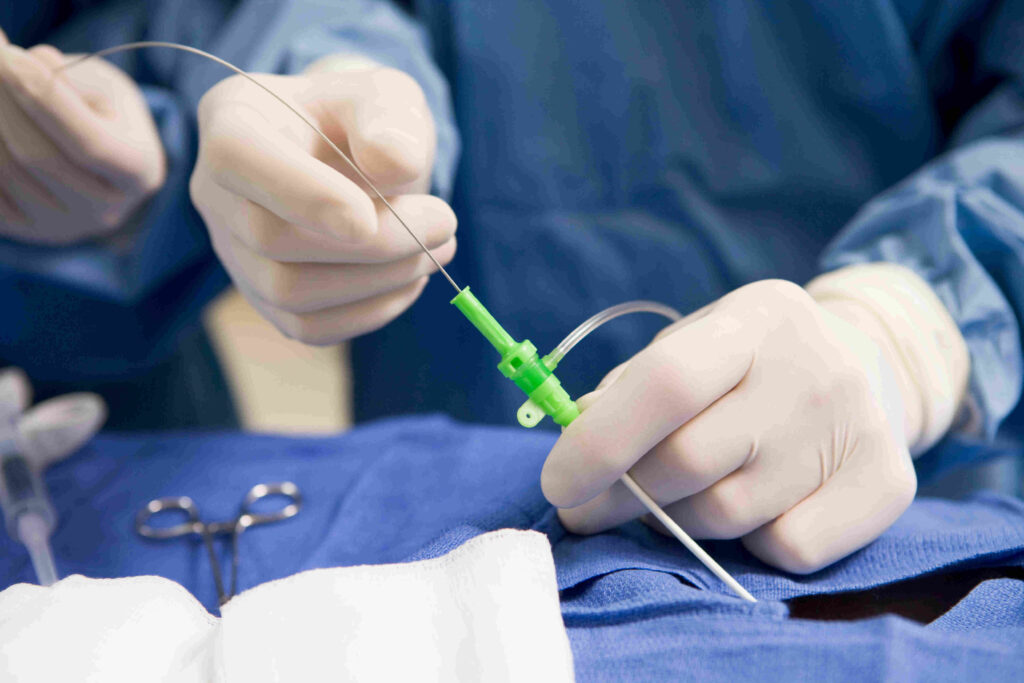
The right heart catheterisation is an invasive but low-pain examination. In this procedure, a thin, flexible catheter is advanced via the femoral vein (groin vein) to the right atrium and into the right ventricle. From there, the balloon catheter reaches the pulmonary arteries.

The aim of right heart catheterisation is the direct measurement of oxygen saturation in the pulmonary circulation and pressure values in the right heart. In a healthy person, the mean pulmonary arterial pressure is less than 20 mmHg. As the gold standard for diagnosis in cardiology, right heart catheterisation enables the precise measurement of the pulmonary circulation and thus the reliable diagnosis of pulmonary hypertension.

Typical indications for right heart catheterisation include suspected pulmonary hypertension, often as a result of previous severe pulmonary embolisms. Right heart catheterisation can also aid diagnostic clarification in cases of suspected shunt connections between the heart chambers. The average duration of right heart catheterisation is 20 to 40 minutes. In suitable cases, right heart catheterisation can be performed as an outpatient procedure.

Indications and use of the right heart catheter


Catheter

A right heart catheterisation is used when non-invasive investigations do not provide a clear diagnosis or when accurate pressure measurement is required.

Typical indications for right heart catheterisation are:

  • Unclear findings in imaging: when an ultrasound provides indications of pressure loading but this cannot be precisely quantified.
  • Suspicion of pulmonary hypertension: Right heart catheterisation is considered the gold standard here, as it directly measures the pressure conditions in the pulmonary circulation.
  • Unclear shortness of breath (dyspnoea): Particularly with exertion-dependent symptoms without a clear cause.
  • Therapy planning and progress monitoring: Assessment of severity and targeted management of treatment.
  •  

The right heart catheter provides precise haemodynamic measurements, making it one of the most reliable methods for the definitive clarification of complex cardiopulmonary issues.

Preparation and Medical Framework of a Right Heart Catheterisation

In preparation for a right heart catheterisation, a blood sample is taken to check kidney function, coagulation, and thyroid values. An ECG check complements this preparation, and a comprehensive, individual risk and information discussion is also conducted.

On the day of the examination, you will present sober, after a fasting period of four to six hours, at the cooperating clinic. During the preceding information and consent discussion, it will already be discussed whether anticoagulant medication needs to be discontinued.

Contraindications for right heart catheterisation

Right heart catheterisation is an established, invasive procedure that can usually be performed safely.

The following relative contraindications should be noted:

  • Severe renal insufficiency
  • Severe hyperthyroidism
  • Contrast media allergy

In the presence of a (relative) contraindication, individual options are carefully assessed to determine whether the right-heart catheterisation can be performed on an outpatient basis or if inpatient admission is necessary.

Right heart catheterisation procedure overview

The right heart catheterisation procedure begins with sterile preparation at our partner clinic. Following the administration of a local anaesthetic, the femoral vein is punctured. The doctor then guides the catheter with the bloodstream through the right atrium and the right ventricle into the pulmonary arteries.

Continuous monitoring of oxygen saturation and pressure values will follow. This allows for a differentiated assessment of heart and lung function. If necessary, a contrast agent will be injected for optimised visualisation, which may lead to a brief feeling of warmth in the body. This quickly subsides.

Throughout the duration of the examination, the patient remains awake and responsive. A right heart catheterisation typically does not cause pain, although some patients may experience a local sensation of pressure or a foreign body. Medical monitoring continues after the right heart catheterisation procedure. Discharge is usually possible on the same day.

Risks and specific complications of right heart catheterisation

A heart catheterisation is advisable when an accurate assessment of the coronary arteries, heart chambers, or heart valves is required.

Possible risks of a right heart catheterisation include:

  • Local complications at the injection site: These primarily include small haematomas (bruises) or light bleeding.
  • Vascular injuries: In rare cases, injuries to venous vessels can occur during catheter advancement.
  • Heart rhythm disturbances: Temporary rhythm disturbances can occur due to catheter manipulation in the heart, which are usually self-limiting.
  • Very rare serious complications: injuries to the heart or lungs, for example resulting in pulmonary haemorrhage.
  • Reactions to medication or contrast agents: Allergic reactions or circulatory complaints can occasionally occur.

Before the examination, a detailed medical explanation is provided, during which all individual risks are discussed. During the procedure, you will be continuously monitored. Should complications such as allergic reactions or circulatory instability arise, the examination will be immediately interrupted and treated accordingly.

Our cardiology care for right heart catheterisation

In our cardiology practice at Promenadeplatz, we carry out examinations in cooperation with clinics on an outpatient basis. We provide comprehensive and personal support for preventive care, follow-up care, and long-term medical treatment.

Important questions about right heart catheterisation

The right heart catheterisation is minimally painful. Some patients find the puncture uncomfortable, which depends on individual pain perception.

The usual duration of a right heart catheterisation is between 20 and 40 minutes.

Minor bruising is possible. Serious complications include heart rhythm disturbances, tissue and vascular injury, thrombosis and embolisms, or allergic reactions.

A right heart catheterisation is performed when pulmonary hypertension, shunt connections or forms of pulmonary embolism are suspected.

A right heart catheterisation can be performed as an outpatient procedure if there are no pre-existing cardiac conditions or cardiac arrhythmias. For patients with risk factors, hospital admission is necessary.

Yes, a referral is required to perform a right heart catheterisation. No referral is necessary for an inpatient stay or an acute emergency.