Left heart catheterisation: Procedure, duration and significance of the examination

The examination of the heart using a left heart catheter is one of the most important diagnostic procedures in cardiology. During the Right heart catheterisation primarily used to measure the pressure conditions in the right heart, the focus of a left heart catheter is on visualising the left ventricle and the coronary arteries.

In our practice, we handle the indication, informed consent, and aftercare for left heart catheterisation. The procedure is carried out in one of our partner clinics, with well-established organisation and medical expertise.

Left ventricular catheterisation at a glance

The left heart catheterisation is an invasive examination in which a thin balloon catheter is advanced via the radial artery at the wrist or the femoral artery in the groin into the left ventricle to visualise it and the coronary arteries. With the help of contrast medium and X-rays, the coronary arteries can be precisely depicted.

The aim of the left heart catheterisation procedure is to visualise constrictions and blockages in the coronary arteries and to measure the pressure conditions in the left side of the heart.

The duration of a left heart catheterisation is between 20 and 40 minutes. If therapy, such as the use of a stent, needs to be performed during this time, the procedure may take longer. Patients are supervised throughout the entire period and are always informed about the next steps.

Unless there is an emergency situation or increased risks such as bleeding disorders, kidney disease or pre-existing heart conditions, a left heart catheterisation can be performed as an outpatient procedure.

Medical significance of left heart catheterisation


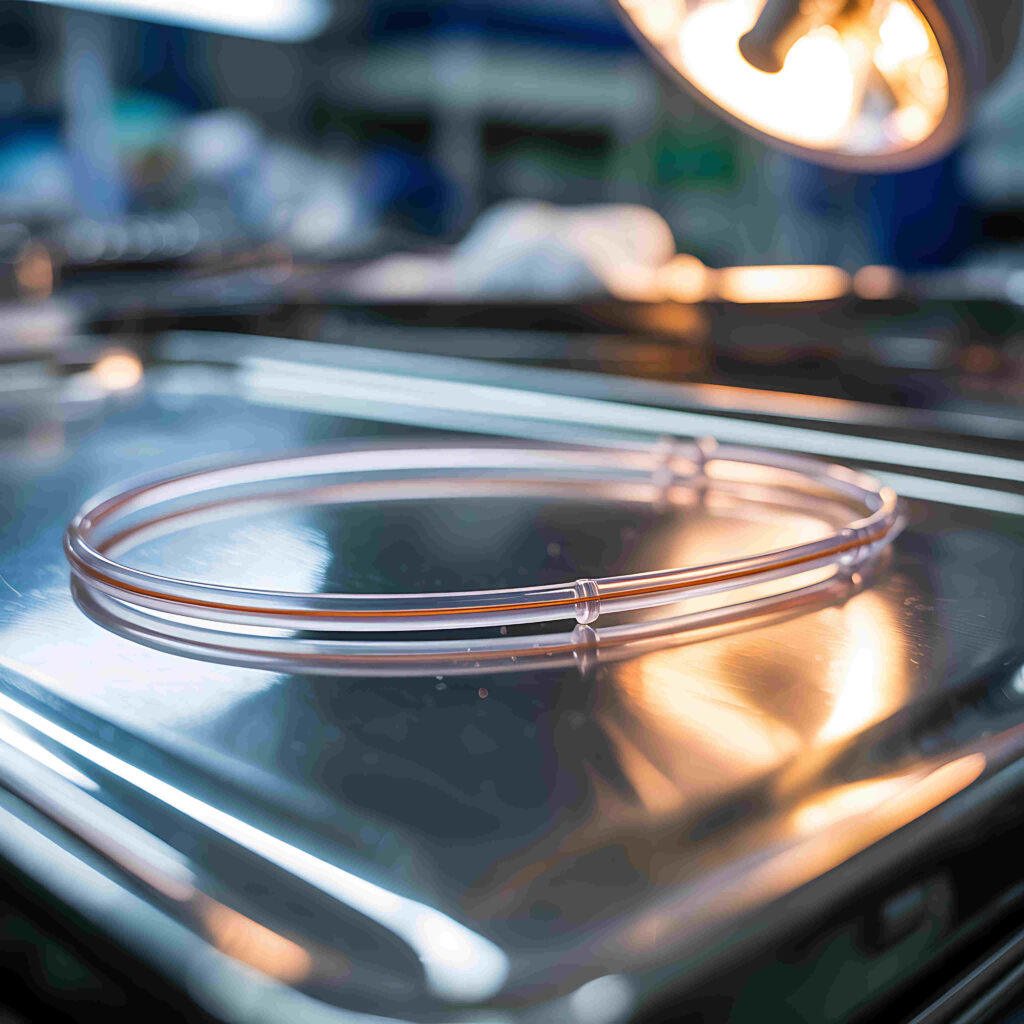
A heart catheter is on an operating table

A left heart catheterisation is performed if coronary heart disease is suspected or unclear chest discomfort needs to be clarified.

The indications for left heart catheterisation are:

  • Dilatation of vascular stenoses
  • Stent insertion
  • Assessment of ventricular function
  • Diagnosis of possible heart failure

The left heart catheter is low-risk and diagnostically informative, nevertheless, it may not be performed or only performed with special preparation in some cases.

Relative contraindications for a left heart catheterisation include:

  • Severe renal insufficiency
  • Contrast medium allergy
  • Severe coagulation disorders
  • Severe peripheral arterial disease (PAD)
  • Uncontrolled hyperthyroidism

Before the left heart catheterisation, we carry out all necessary preliminary examinations and appointment scheduling in our practice. On the day of the examination itself, patients then present themselves at the selected, cooperating clinic.

Investigation preparation and left heart catheterisation procedure

Before a left heart catheterisation, blood tests are carried out to check coagulation values, kidney function, and the thyroid. These values are needed to be able to safely use a contrast agent. Before the left heart catheterisation examination is performed, we inform our patients in a detailed consultation about all procedures and risks.

On the day of the examination, an ECG check will be carried out before the left heart catheterisation. Patients should arrive at our partner clinic on an empty stomach (fasting for four to six hours). The left heart catheterisation procedure will then be followed by sterile preparations performed in the cardiac catheterisation laboratory.

The procedure itself is carried out while you are awake, and a professional team is on hand to answer any questions. After a local anaesthetic, the catheter is advanced to the left ventricle under X-ray control. The coronary arteries can then be visualised by administering a contrast agent.

During the administration of contrast medium, some patients feel a sensation of warmth, which disappears very quickly. The left heart catheter is also associated with little to no pain; only a feeling of pressure is often described.

The exact duration of a left heart catheterisation depends on the specific question being addressed. During the procedure, if indicated, treatments such as stent implantation or balloon dilatation can be initiated and carried out directly.


Possible left heart catheterisation complications

The left heart catheter is an established invasive diagnostic procedure, routinely used in cardiology to visualise the left ventricle, heart valves, and coronary arteries. As with all invasive procedures, various complications can occur.

Common complications from left heart catheterisation:

  • Bruising or bleeding at the injection site
  • Heart rhythm disorders
  • Reactions to the contrast agent (which are reduced by our preparation and control of kidney function)

Very rare complications of left heart catheterisation:

  • Heart attack (Myocardial infarction)
  • Stroke (apoplexy)
  • Vascular occlusion (e.g. coronary arteries or peripheral access arteries)

Through the investigator's extensive experience, continuous haemodynamic monitoring, and immediate adjustment of the procedure in unstable situations, risks are minimised.

Aftercare, results and resilience after left heart catheterisation

After a left heart catheterisation has been performed as an outpatient procedure, we protect the puncture site with a pressure bandage or a special compression system. Patients are cared for in the clinic for several more hours and are usually discharged on the same day. Physical rest of the leg or arm is recommended for 24 hours. The results of the left heart catheterisation will be discussed with you during or immediately after the examination, and the written report from the clinic will follow shortly thereafter.

Our cardiology care surrounding left heart catheterisation

From the careful indication for a left heart catheterisation, through the organisation of its performance in a collaborating clinic, to aftercare and long-term cardiac management. At our cardiology practice on Promenadeplatz, we support you comprehensively and personally.

Important questions about left heart catheterisation

The left heart catheterisation is low-pain; you will only feel a slight pressure from the catheter.

The average duration of a left heart catheterisation procedure is 20 to 40 minutes of examination time. If a treatment such as stent implantation is necessary, the duration can increase to 30 to 90 minutes.

The essential findings are already available during the examination and are discussed directly with the patient.

Minor consequences include local bleeding, infections at the puncture site, and haematomas. Serious complications include contrast medium-induced kidney damage, arrhythmias, heart attack, stroke, or vascular injury.

The left heart catheter is the gold standard for the investigation of angina pectoris (chest pain) and for emergency treatment of heart attacks. Furthermore, a left heart catheter is used for the diagnosis of coronary artery disease or potential vascular stenoses and occlusions.