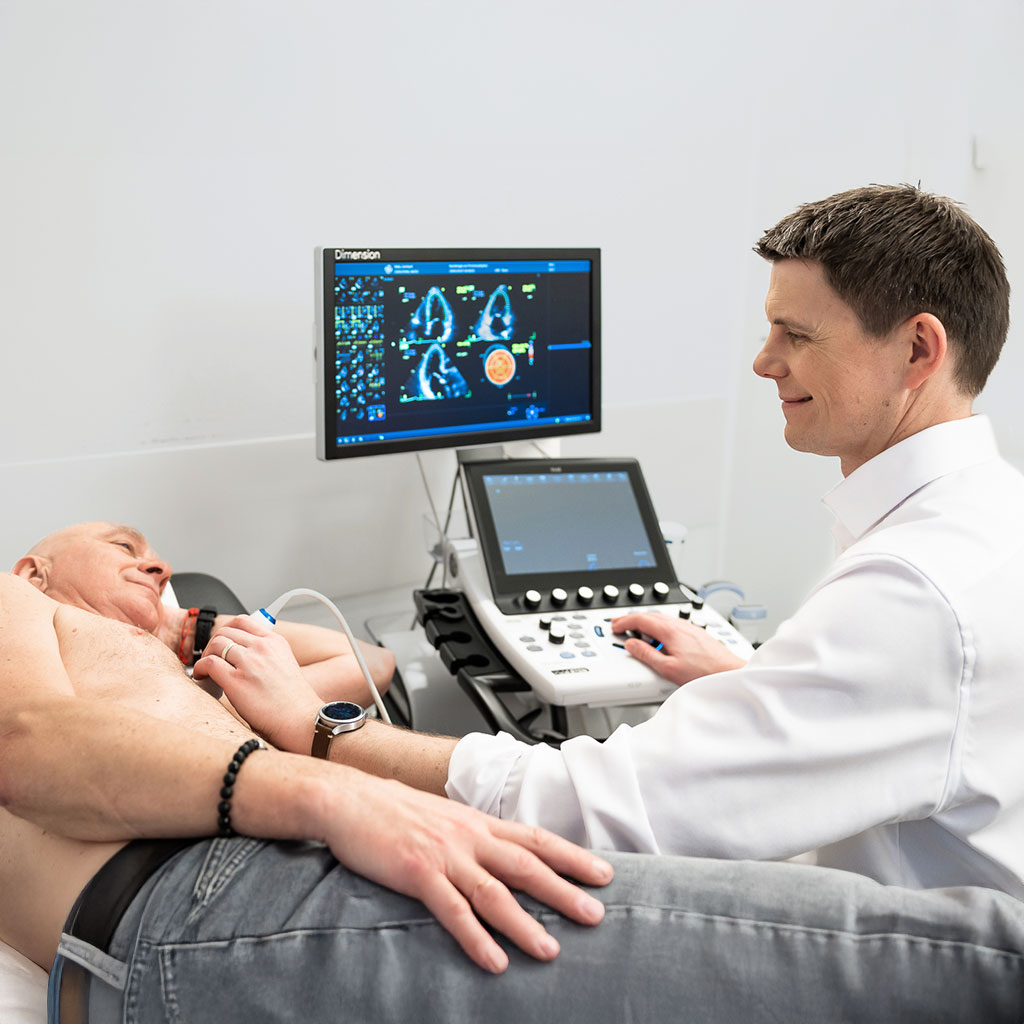
Cardiological diagnostics: overview of examination methods

Many heart diseases are initially unremarkable. When the first symptoms appear, the heart function is often already impaired. This makes it all the more important to have the signs of the disease clarified as quickly as possible. Early cardiological diagnosis makes a decisive contribution to recognising potential risks and counteracting them in a targeted manner.

Our cardiological diagnostics in Munich include various methods of heart examination. The most basic procedures include long-term blood pressure measurement and the ECG Munich, which we use to measure the electrical activity of your heart. With the help of echocardiography in Munich, we can visualise your heart valves and ventricles in motion. The Doppler Munich visualises the blood flow in the vessels and helps us to identify constrictions. For further questions, a cardiac CT scan or cardiac catheterisation provides additional certainty. Our cardiological diagnostics services also include pacemaker monitoring and INR monitoring.

Cardiological diagnostics as the basis for well-founded medical decisions

Heart problems manifest themselves in many different ways. Although most symptoms are not immediately life-threatening, they should nevertheless be examined promptly to rule out serious illnesses and enable early treatment if necessary.

Cardiological diagnosis is particularly important if the following signs are present:

  • Cardiac arrhythmias such as palpitations or palpitations
  • unexplained attacks of dizziness or repeated episodes of impending unconsciousness
  • New onset of breathlessness during physical activity
  • Recurrent tightness or chest pressure during physical exertion
  • Chest pain after infections
  • Swollen ankles in conjunction with shortness of breath at night and rapid weight gain

Cardiological diagnostics are also useful for risk factors such as high blood pressure, elevated blood lipid levels, diabetes or a family history (e.g. heart attacks in parents or siblings). A cardiological examination is also recommended for those returning to sport after the age of 35.

These diseases can
Identify cardiological functional diagnostics

Cardiological diagnostics in Munich are able to detect a broad spectrum of cardiovascular diseases. It plays a particularly important role in these disease groups:

The basic examinations include:

  • Diseases of the coronary arteries (e.g. coronary heart disease, angina pectoris)
  • Vascular diseases and circulatory disorders (e.g. arteriosclerosis, vasoconstriction)
  • Heart valve diseases (e.g. aortic valve insufficiency, mitral valve insufficiency or stenosis)
  • Cardiac muscle diseases (e.g. myocarditis, heart failure, cardiomyopathies)
  • Pericardial and endocardial diseases (e.g. pericarditis, pericardial effusion, endocarditis)
  • Congenital or acquired structural heart changes (e.g. septal defects, valve anomalies)

In the case of cardiac arrhythmias such as atrial fibrillation, extrasystoles, tachycardia or bradycardia, cardiological diagnostics show whether the heart is the cause or whether other triggers are behind it. In addition, cardiological diagnostics help to identify and assess risk factors such as high blood pressure, diabetes-related heart changes and the consequences of long-term stress or family strain.

Procedure for the heart examination in Munich

If you make use of our cardiological diagnostics, you can expect a thorough heart examination, which can include various components depending on the symptoms. It always starts with an anamnesis, a detailed discussion about your symptoms and medical history. This is followed by a physical cardiological examination including listening to your heart and lungs as well as measuring your pulse and blood pressure. We then decide together which further diagnostic methods are appropriate.

The next step in the heart examination in Munich is often a resting ECG, which measures the electrical activity of your heart at rest. In the case of arrhythmia, stress ECGs or long-term measurements are also used. Cardiological diagnostics can also include imaging procedures that provide information about the function and structure of your heart valves and heart vessels. In addition to ultrasound examinations of the heart, this also includes modern procedures such as 3D echo, which enables a particularly detailed and spatial visualisation of the heart structures.

Cardiac catheterisation often allows cardiological diagnostics to be combined with immediate treatment. This is the case, for example, if cardiological functional diagnostics in Munich reveal a relevant narrowing or blockage of a vessel. Other imaging procedures such as cardiac MRI or duplex sonography complete the diagnostic spectrum.

Cardiological diagnostics generally do not require any extensive preparation. We recommend wearing comfortable clothing, as this makes the physical examination and technical measurements easier. In some cases, it may be advisable to avoid caffeinated drinks or nicotine for a short time, as these stimulants can affect the heart rate and blood pressure. If preparatory measures are required for the cardiological diagnostics, we will discuss these with you in advance.

Most of the results are available immediately after the examination; only long-term measurements require a few days to be analysed. Once the cardiological diagnostics have been completed, we discuss the results with you and make a clear recommendation on how to proceed. Cardiological diagnostics are not painful. Most procedures are inherently painless and you will be given a local anaesthetic for cardiac catheterisation.

General conditions for cardiological functional diagnostics in Munich

If you have statutory health insurance, you will need a referral from your GP for cardiological diagnostics with us. On the one hand, this serves as proof that the cardiological functional diagnostics are medically necessary and urgent. On the other hand, without a referral, there may be problems with the health insurance company covering the costs. Privately insured patients can often make use of cardiological diagnostics in Munich without this formality. However, medical reasons for cardiological diagnostics are still required for reimbursement.

Would you like to have your cardiological diagnostics carried out by us and have questions about examination methods, organisational procedures or the required documents? Please get in touch with us and we will clarify everything else in a personal consultation.