
Cardiology preventive care: maintaining heart health, reducing risks

Diseases of the cardiovascular system often develop gradually and go unnoticed for a long time. Early cardiological screening is, just like the Cardiological diagnostics, This is crucial to prevent heart attacks, strokes and other secondary diseases. We support you with medical nutritional counselling in Munich and targeted obesity treatment in Munich. For a sustainable promotion of heart health and quality of life.

What does cardiological screening mean?

Preventive cardiac care includes all measures aimed at recognising and preventing cardiovascular diseases at an early stage. This includes regular check-ups, laboratory tests, blood pressure and cholesterol checks as well as the assessment of individual risk factors. If you know your risks early on, you can take targeted preventative measures or treat illnesses before they lead to serious problems.
Indications for cardiological screening

Cardiological preventative care is particularly relevant for cardiovascular diseases such as:

  • Coronary heart disease (CHD)

  • Hypertension (high blood pressure)

  • Myocardial infarction (heart attack)

  • Arrhythmias (cardiac arrhythmia)

  • Heart failure (cardiac insufficiency)

Examinations for cardiological screening

The specific examinations depend on age, symptoms and individual risk factors.

Typical examination components of cardiological screening are

  • Medical history and risk assessmentLifestyle, family history, smoking, alcohol, diabetes, obesity

  • Physical examinationListening to heart and lungs, blood pressure measurement

  • Cardiac diagnosticsRest and stress ECG, 24-hour long-term ECG

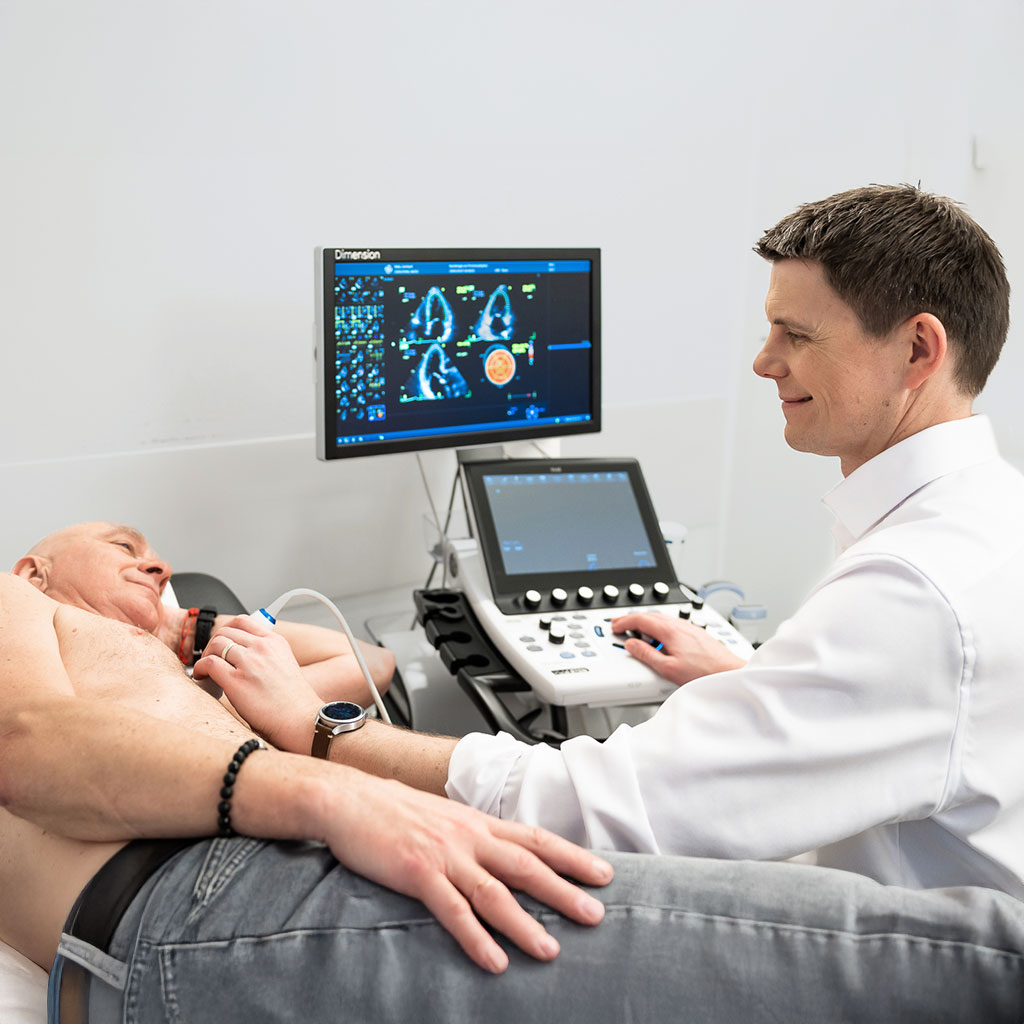
  • ImagingEchocardiography for assessing heart valves and cardiac function

  • Blood testsCholesterol levels, inflammatory markers

Target audience for cardiac screening

Preventative care for the heart and circulation is sensible for all who have an increased risk of heart disease, for example:

  • Family history of heart disease or high cholesterol
  • Smokers or former smokers
  • Lack of exercise
  • Overweight or obesity
  • High blood pressure, diabetes or elevated cholesterol levels

Even individuals experiencing symptoms such as a racing heart, chest pain, shortness of breath, or those who have had a heart attack, should undergo preventive screening.

Cardiological preventive care as an integral part of modern preventive medicine

Many risk factors can be identified and targeted early. Regular cardiological screening detects changes before serious events such as a heart attack or stroke occur.

Important medical precautions for risk reduction include:

  • Blood pressure (hypertension) lowering
  • Regulating high cholesterol levels
  • Losing excess weight (obesity)
  • Giving up smoking
  • More movement in everyday life
  • Implementing a healthy diet

In this way, preventive care supports quality of life and performance in the long term. Life expectancy increases.

From what age is a cardiology check-up advisable?

In principle, cardiac preventative care makes sense at any age. The extent of the risk for cardiovascular diseases depends on age, gender, and individual risk factors. As a man, we recommend a first cardiac preventative check-up from around the age of 35. This is especially true for individuals with risk factors such as high blood pressure, diabetes, obesity, or a family history of heart disease. As a woman, you should consider cardiac preventative care from around the age of 40. Statistics show that cardiovascular problems tend to occur slightly later in life on average for women.

Frequency of cardiological screening

  • With low risk: Every 3 - 5 years
  • In case of increased risk: Annually
  • With pre-existing heart problems: Tight controls

Cardiological check-up despite being symptom-free

Freedom from complaint doesn't automatically mean a heart is healthy; illnesses often appear unexpectedly. Only early detection allows for timely action. Even small changes in lifestyle or medication therapy can prevent serious complications.
Furthermore, risk profiles change over the course of a lifetime: stress, lack of exercise, or weight can become more significant later on. Early cardiac preventative care increases the chances of remaining active and healthy for a long time.

Typical risk factors for cardiovascular diseases

Certain risk factors put a particular strain on the cardiovascular system and make heart attack prevention essential. These include

  • Family historyHeart attack or stroke in parents/siblings (under 55 years for men, under 65 years for women)
  • Genetic predispositionRaised cholesterol or heart rhythm disturbances
  • High blood pressure (hypertension)Often asymptomatic, puts permanent strain on the heart and blood vessels
  • Elevated cholesterolHigh LDL, low HDL, promotes arteriosclerosis and heart attack
  • Diabetes MellitusAttacks the vessels, increases the risk of coronary heart disease
  • Overweight (Obesity)In particular, belly fat promotes high blood pressure, diabetes, and cholesterol problems
  • Unhealthy lifestyleSmoking, lack of exercise or an unhealthy diet
  • Lack of sleep and chronic stress
  • Increasing age
  • Previous cardiovascular diseases or symptoms

Anyone who recognises themselves in one or more risk factors benefits from regular cardiovascular preventative care: early detection and heart attack prevention can save lives.

Heart attack prevention through cardiological prevention

Cardiological preventative care can reduce your individual risk of a heart attack early on, even before symptoms occur. An individual risk assessment by us, as your treating cardiologists, plays a central role in this. You can also strengthen your cardiovascular system yourself and thus reduce risks.

Cardiological prevention measures include

  • Healthy eating (e.g. Mediterranean diet) and giving up smoking

  • Regular exercise (at least 150 minutes of moderate activity per week)

  • Weight loss

  • Stress management

If necessary, medication such as antihypertensives, cholesterol-lowering drugs (statins) or blood thinners are used to prevent vascular damage. This results in the course of therapy for heart screening. 

Lifestyle as the key to cardiac prevention

Everyday life has a major impact on cardiovascular health. Therefore, cardiac preventive care takes into account not only medical examinations but also your daily habits, which can reduce risk factors and protect your heart in the long term. The combination of a healthy diet, sufficient exercise, conscious stress management and early medical support protects the heart and blood vessels in the long term, thus optimally complementing cardiac preventive care.

Cardiological prevention in Munich

If you have statutory health insurance, a referral from your GP is required for cardiological screening in our practice. This serves as proof that a check-up is medically necessary. Privately insured persons can also have cardiological screening carried out in Munich without a referral.

Would you like to keep an eye on your personal stroke and heart attack prevention? Here at Cardiology am Promenadeplatz, we support you with cardiac check-ups to identify your individual cardiovascular risk and to specifically adapt your lifestyle regarding diet, exercise, and stress management.