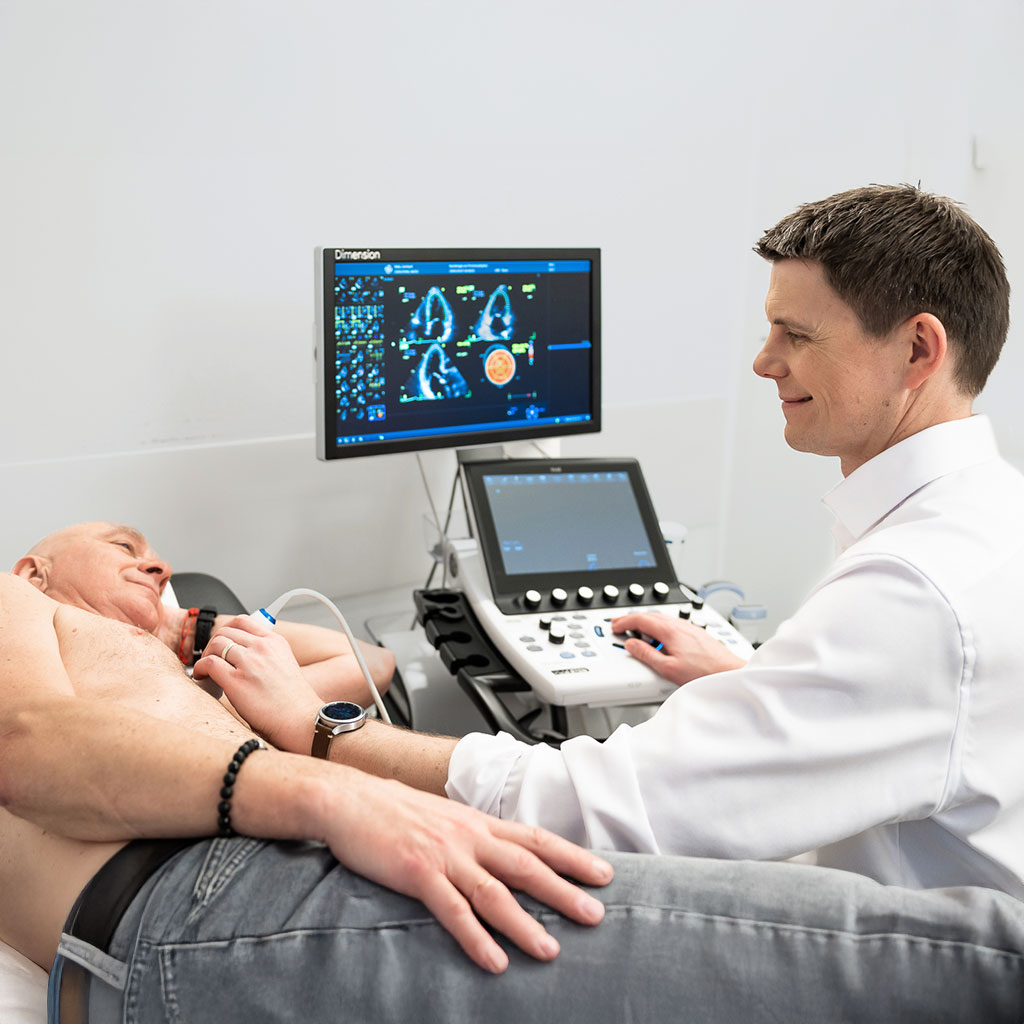
Procedure for the heart examination in Munich
If you make use of our cardiological diagnostics, you can expect a thorough heart examination, which can include various components depending on the symptoms. It always starts with an anamnesis, a detailed discussion about your symptoms and medical history. This is followed by a physical cardiological examination including listening to your heart and lungs as well as measuring your pulse and blood pressure. We then decide together which further diagnostic methods are appropriate.
The next step in the heart examination in Munich is often a resting ECG, which measures the electrical activity of your heart at rest. In the case of arrhythmia, stress ECGs or long-term measurements are also used. Cardiological diagnostics can also include imaging procedures that provide information about the function and structure of your heart valves and heart vessels. In addition to ultrasound examinations of the heart, this also includes modern procedures such as 3D echo, which enables a particularly detailed and spatial visualisation of the heart structures.
Cardiac catheterisation often allows cardiological diagnostics to be combined with immediate treatment. This is the case, for example, if cardiological functional diagnostics in Munich reveal a relevant narrowing or blockage of a vessel. Other imaging procedures such as cardiac MRI or duplex sonography complete the diagnostic spectrum.
Cardiological diagnostics generally do not require any extensive preparation. We recommend wearing comfortable clothing, as this makes the physical examination and technical measurements easier. In some cases, it may be advisable to avoid caffeinated drinks or nicotine for a short time, as these stimulants can affect the heart rate and blood pressure. If preparatory measures are required for the cardiological diagnostics, we will discuss these with you in advance.
Most of the results are available immediately after the examination; only long-term measurements require a few days to be analysed. Once the cardiological diagnostics have been completed, we discuss the results with you and make a clear recommendation on how to proceed. Cardiological diagnostics are not painful. Most procedures are inherently painless and you will be given a local anaesthetic for cardiac catheterisation.